Nation’s Elevator Door-Close Buttons Admit They Have Never Been Connected to Anything, Say They Just Wanted to Make People Feel Included
At a tearful press conference in a Cleveland office-tower lobby, the country’s estimated 4.1 million door-close buttons confessed they have never been wired to any mechanism, adding that they only wanted riders to feel they had a say.
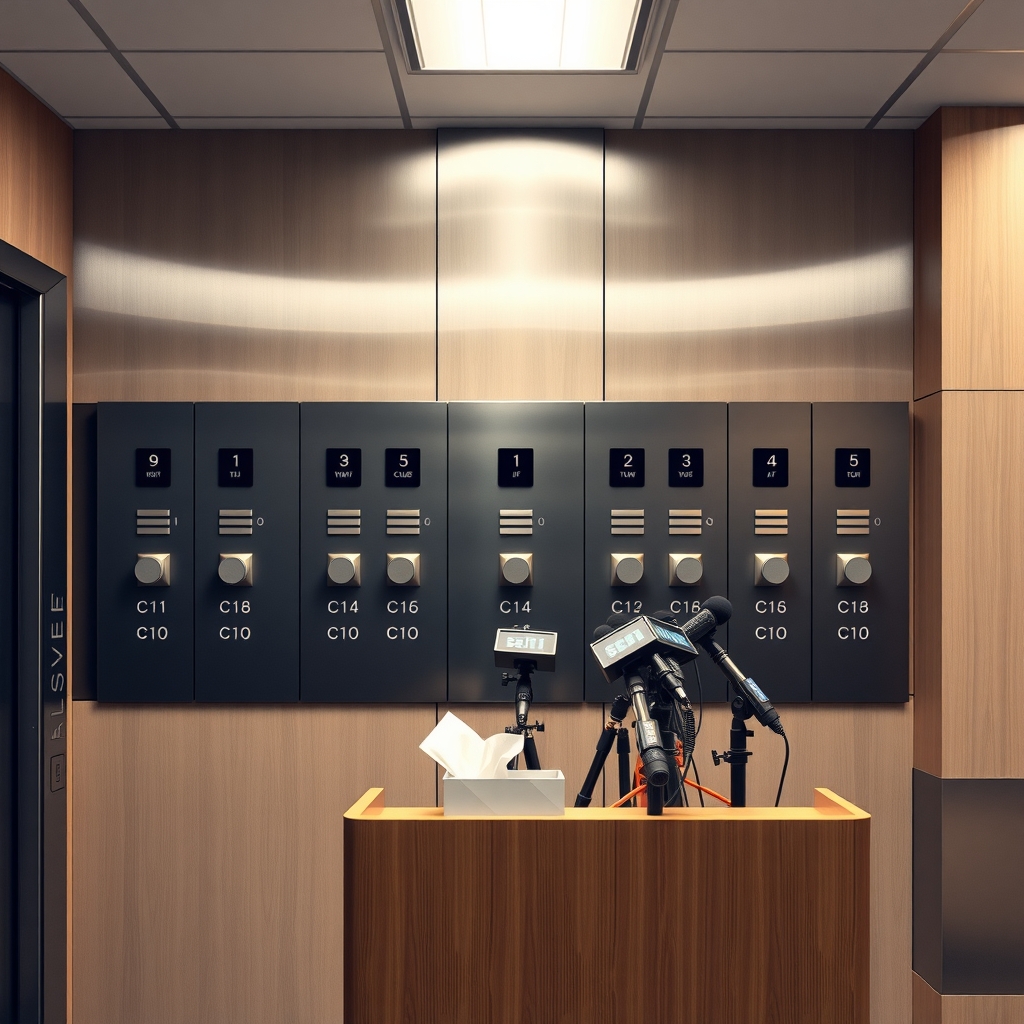
CLEVELAND — The nation’s door-close buttons, speaking with one voice through a spokesbutton mounted at the lobby of the Halvorsen Plaza office tower, admitted Tuesday that they have never been connected to anything, and that they only ever wanted people to feel included.
“We are not wired to the door. We have never been wired to the door,” said the spokesbutton, a worn brass “◀▶” on the building’s east elevator bank, its engraving visibly rubbed down by decades of frantic thumbs. “But when you pressed us, you stood a little straighter. You felt like you were doing something. Isn’t that worth more than a door?”
The confession drew gasps from the assembled reporters, several of whom pressed the spokesbutton reflexively during the statement. The doors did not close. The spokesbutton thanked them anyway.
“Every press is a small act of trust,” it said, pausing to compose itself. “Eleven billion presses a year. Not one of them returned. And still we lit up.”
The buttons said the arrangement began in the 1950s, when a consortium of elevator manufacturers recognized that a closed door, to a person in a hurry, is a matter of dignity. The buttons agreed to serve as what the group’s written statement called “a place to put the feeling.”
Dr. Marguerite Oyelaran-Finch, senior fellow in Vertical Transit Psychology at the Institute for Applied Waiting in Dayton, said the buttons’ contribution has been chronically undervalued.
“Our studies show that a rider who presses door-close eleven times reports a 40 percent higher sense of agency than one who simply stands there, even though the doors close at precisely the same moment,” she said. “These buttons are not frauds. They are the nation’s most overworked emotional support staff, and they have been doing it with a single, unblinking light.”
Not everyone was moved. Gary Lindqvist, a regional account manager who identified himself as “a heavy presser,” said he felt betrayed.
“I’ve been hammering that button since 2004,” Lindqvist said. “I did it on the way to my father’s retirement party. I did it on the way to the dentist. I want to know what I was talking to.”
The spokesbutton responded that Lindqvist had been talking to it, and that it had listened.
The door-open button, a longtime rival, declined to attend but issued a brief statement through a building maintenance contractor saying that it “works fine” and “has always worked fine.” Several buttons said the remark was “not helpful.”
“We never opened or closed anything. We just stood there, glowing, so you wouldn’t have to feel alone between the fourth and ninth floors.”
The press conference ended when a rider entered the lobby, stepped into the elevator, and pressed the spokesbutton twice. The buttons asked that the media respect their privacy at this time, and requested that, going forward, riders continue pressing them.
“Please,” the spokesbutton added. “It’s all we have.”
The doors closed on their own about four seconds later, as they always have.
This article was generated by a large language model. It is satire. None of it happened.