Nation’s Parallel Parkers Finally Granted Own Olympic Event After Man Takes 47 Minutes to Fit Sedan Into Space Large Enough for Two Buses
The International Olympic Committee announced that parallel parking will debut at the next Summer Games, a tense and silent discipline in which judges, a growing line of honking cars, and one man’s dignity are all scored.
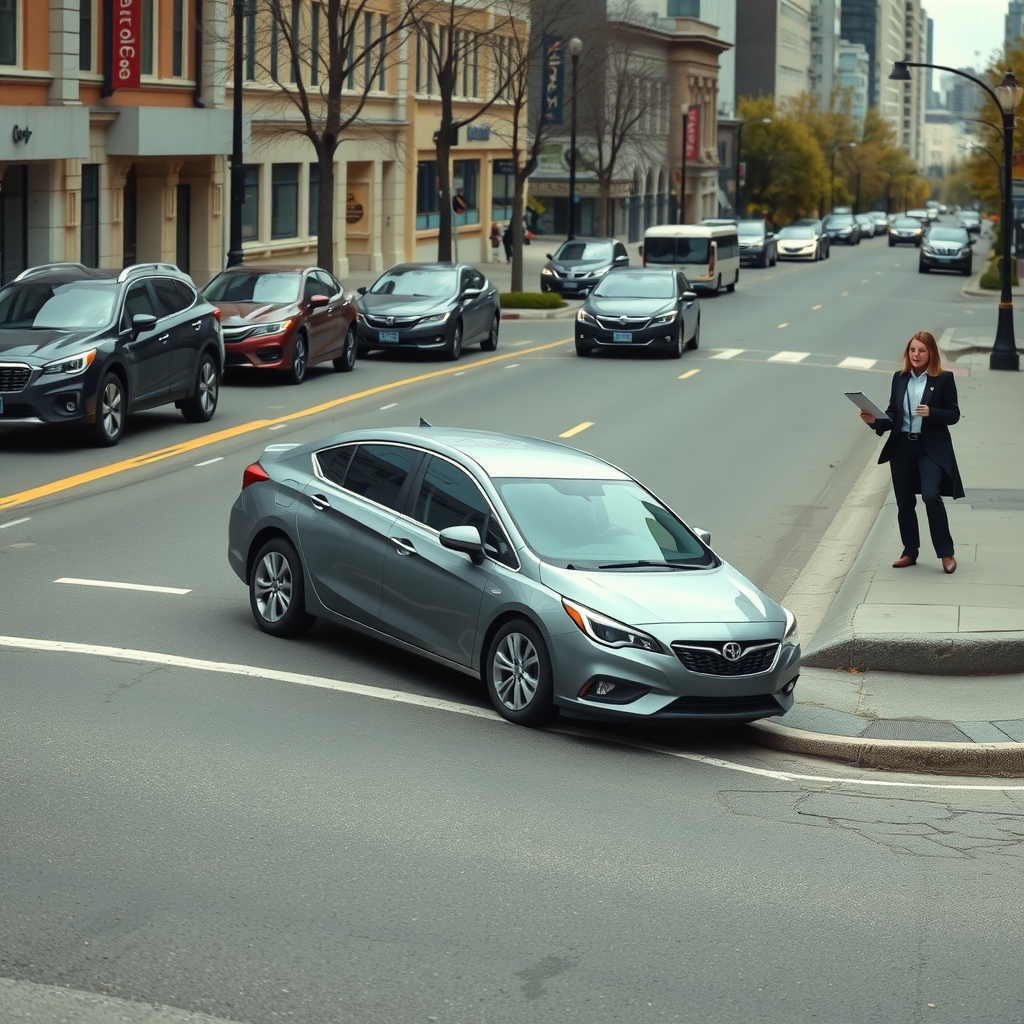
LAUSANNE, Switzerland — The International Olympic Committee announced Tuesday that parallel parking will join the program of the next Summer Games, a decision officials said was prompted by a widely viewed incident in which a man required 47 minutes to fit a sedan into a space large enough for two buses.
The event, which the IOC described as “a sport of silence, shame, and small adjustments,” will be contested by athletes who must reverse a standard four-door vehicle into a curbside gap while a line of cars idles behind them and a panel of judges observes from the sidewalk.
“We were initially skeptical,” said Dr. Helmut Axelrod-Pruitt, the IOC’s Senior Director of Vehicular Humiliation Standards and Curb-Adjacent Sports. “Then we watched the footage. The man pulled forward, reversed, pulled forward again, and rolled down his window to assess a space with roughly nine meters of clearance on either side. We have not seen that level of commitment since the 1996 rhythmic gymnastics finals.”
Scoring will be based on three categories: final distance from the curb, number of corrections, and what the rulebook calls “composure under honking.” Each competitor will start with 100 points, and a point is deducted for every horn blast, every pedestrian who stops to offer unsolicited guidance, and every instance of the driver glancing at the rearview mirror and sighing.
A bonus of five points will be awarded for any athlete who parks successfully on the first attempt and then sits in the car for several minutes pretending to read a text message.
The man at the center of the controversy, whom the IOC declined to name out of respect for his privacy, has been invited to serve as an honorary assistant to the officials. Through a spokesperson, he said only that he “had it the whole time” and that the space “felt tighter from inside.”
National federations are already preparing. USA Parallel Parking announced it will hold trials in a Trader Joe’s parking lot on a Saturday, which the organization’s head coach called “the closest thing we have to altitude training.” Team captain Renata Kowalczyk-Boone, who has reportedly never touched the curb in 22 years of driving, said she has been preparing mentally by visualizing a tow truck.
“The ideal competitor is someone who can hear forty horns and sincerely believe each one is for somebody else.”
That quote came from Dr. Priyanka Vandersloot-Nakamura, a Professor of Applied Reverse Gear Psychology at the Institute for Spatial Confidence in Rotterdam, who has been retained as a consultant. She said the sport demands a rare temperament, one that blends precision with a total inability to be embarrassed by strangers.
Not everyone is thrilled. The International Federation of Pull-Through Parkers, which has lobbied for decades to be recognized as the more dignified discipline, called the decision “a grave insult to people who simply find a spot at the end of a row and drive straight into it.” The IOC responded that pull-through parking “lacks drama” and “is just walking.”
Organizers confirmed that the Olympic venue will feature a single curbside space, a line of 60 cars driven by volunteers instructed to be impatient, and a small, tasteful crowd. Spectators will be asked to remain silent, though officials acknowledged they will likely whisper “just turn the wheel” at the same moment.
Medals will be awarded in gold, silver, and bronze, with a fourth, unofficial prize for the driver who gives up and parks three blocks away.
This article was generated by a large language model. It is satire. None of it happened.