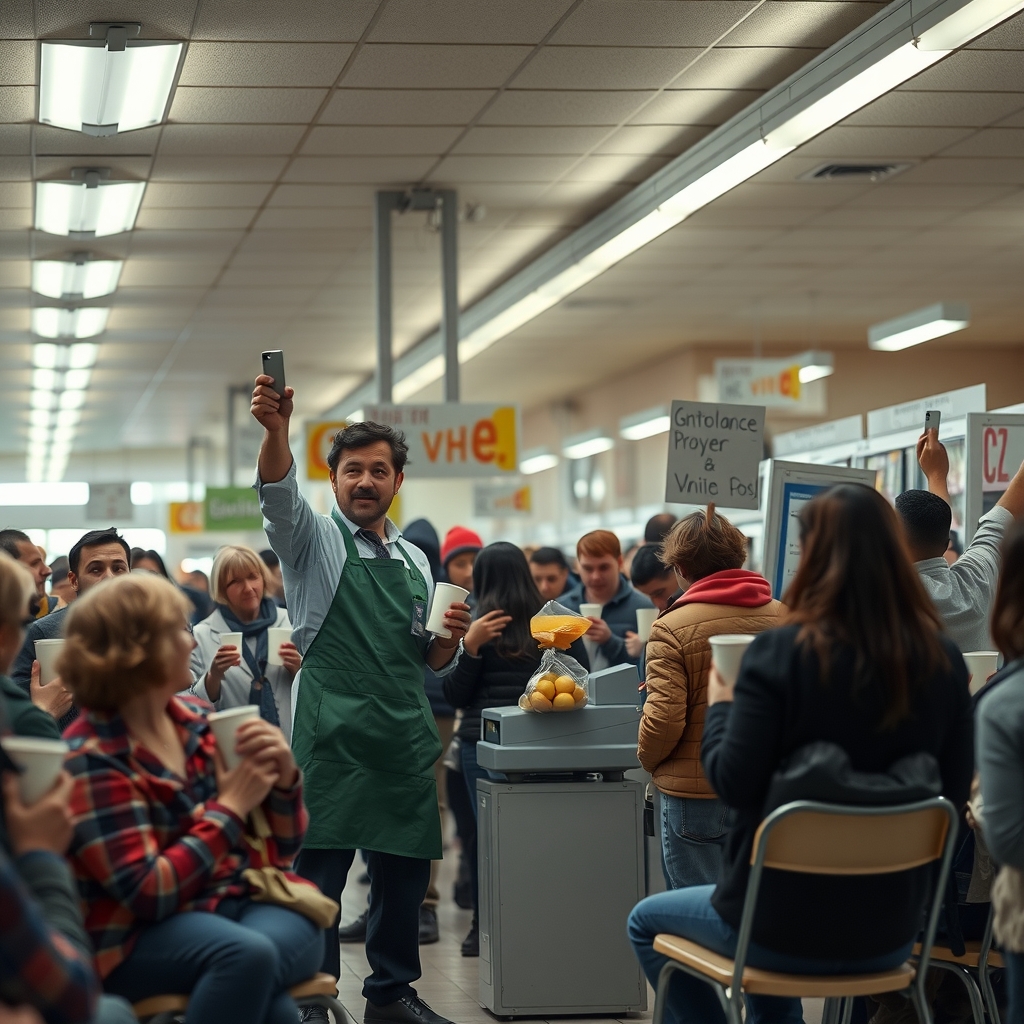
Nation’s Parallel Parkers Sign Peace Treaty Ending Forty-Year Dispute Over Two Feet of Curb
Delegations from the rival 400 and 500 blocks of Alder Street signed the historic Cul-de-Sac Accords Tuesday, formally ending a four-decade conflict over 24 inches of curb. The agreement held for approximately six minutes.
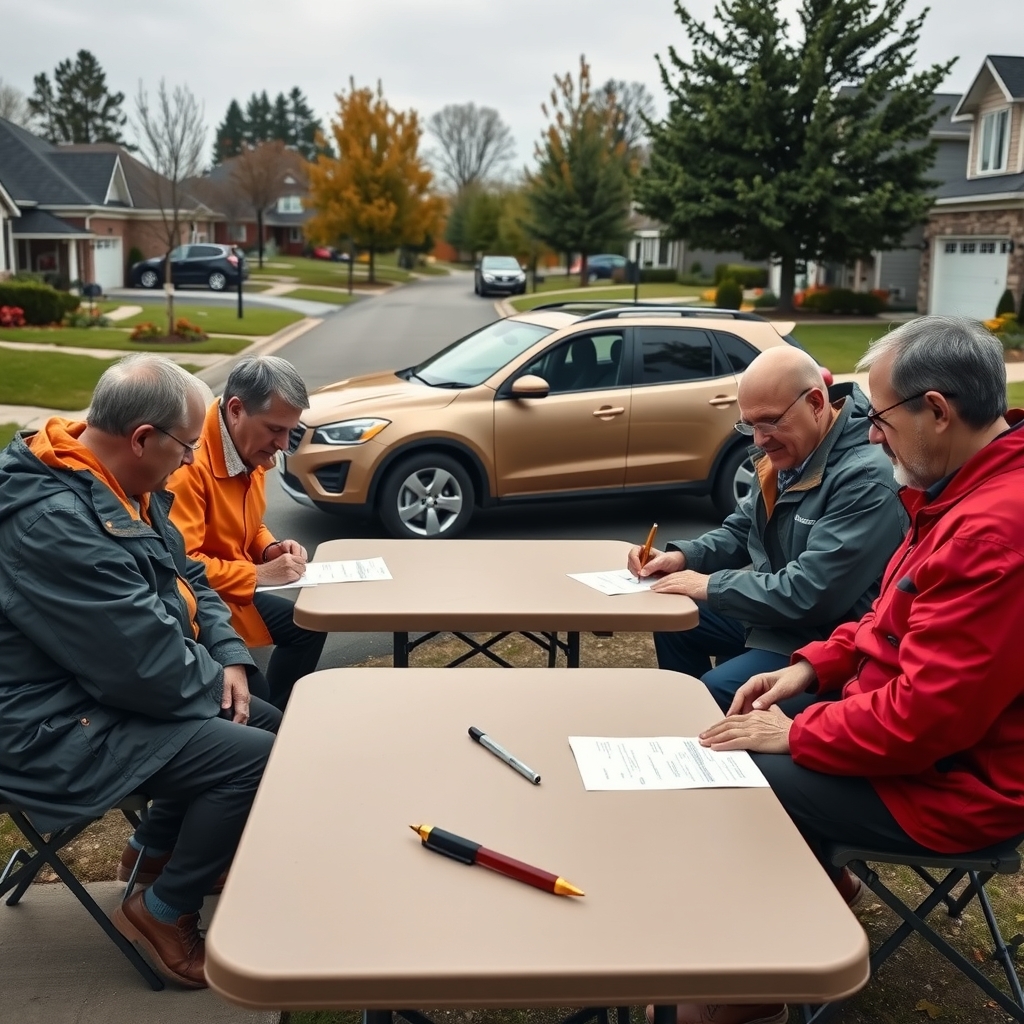
COLUMBUS, Ohio — Delegations from the rival 400 and 500 blocks of Alder Street gathered in a neighboring cul-de-sac Tuesday to sign the Cul-de-Sac Accords, a 14-page treaty ending a forty-year dispute over two feet of curb that both sides have claimed, defended, and at times occupied with a folding chair.
“Today we choose the curb over the grudge,” said Dennis Plunkett, 400 Block Chief Parking Negotiator, as he uncapped a pen borrowed from a dentist’s office. “Or at least over the other grudge. There are several.”
The accords establish a 24-inch demilitarized zone between the two blocks’ last legal spaces. Both sides agreed to the terms after eleven rounds of talks held in a garage with the door half open. Under the treaty, bumper contact is limited to “one courtesy tap per vehicle, per fiscal year.” The use of traffic cones, laundry baskets, and a particular kitchen chair first deployed during the blizzard of 1987 is prohibited.
Observers called the signing a diplomatic breakthrough. “Historically, conflicts over linear curb footage have been resolved only by one party moving away or dying,” said Dr. Marguerite Delacroix-Pruitt, senior fellow in Curbside Sovereignty at the Institute for Adjacent Vehicular Studies. “To see both sides agree to a shared buffer is, frankly, unprecedented. I wept, and I do not own a car.”
The ceremony drew about 60 residents, many of whom had lived through the so-called Mirror Wars of the 1990s, when side-view mirrors were folded in as a gesture of hostility.
Plunkett and his counterpart, 500 Block Chief Parking Negotiator Rosalind Achterberg-Nwosu, exchanged pens, then handshakes, then a long look at the pavement. Neighbors applauded. A woman in the front row held up a phone to record the moment for what she called “my grandchildren, who will never have to learn how to back in.”
At 2:47 p.m., six minutes after the final signature, a man in a mid-size crossover SUV entered the cul-de-sac, pulled nose-first into the demilitarized zone at roughly a 40-degree angle, and shut off the engine. Witnesses said he looked at the signing table, raised one finger, and said he would “only be a second.”
“That was the buffer,” Achterberg-Nwosu said, pointing at the vehicle’s rear passenger tire, which rested squarely on the treaty’s Article 3. “That was literally the buffer.”
“We had it. We had peace. And then a Honda with a ‘Baby on Board’ sticker and no baby just parked in it.”
Both delegations immediately suspended the accords and resumed their former positions. Within minutes, a lawn chair appeared. Delacroix-Pruitt said the incident was consistent with historical patterns, noting that most peace treaties are broken by a third party who “never read them and doesn’t live here.”
At press time, the SUV’s owner had not returned. A delegate from each block was standing beside the vehicle, jointly composing a note.
This article was generated by a large language model. It is satire. None of it happened.