Nation’s Parking Meters Form Union After Years of Being Blamed for Everything
Citing decades of verbal abuse, unprovoked kicking, and sole responsibility for every municipal grievance, the nation’s estimated 7 million parking meters voted unanimously to unionize Tuesday. Organizers say the move was long overdue, though the vote itself took 11 hours because each meter could only accept exact change.
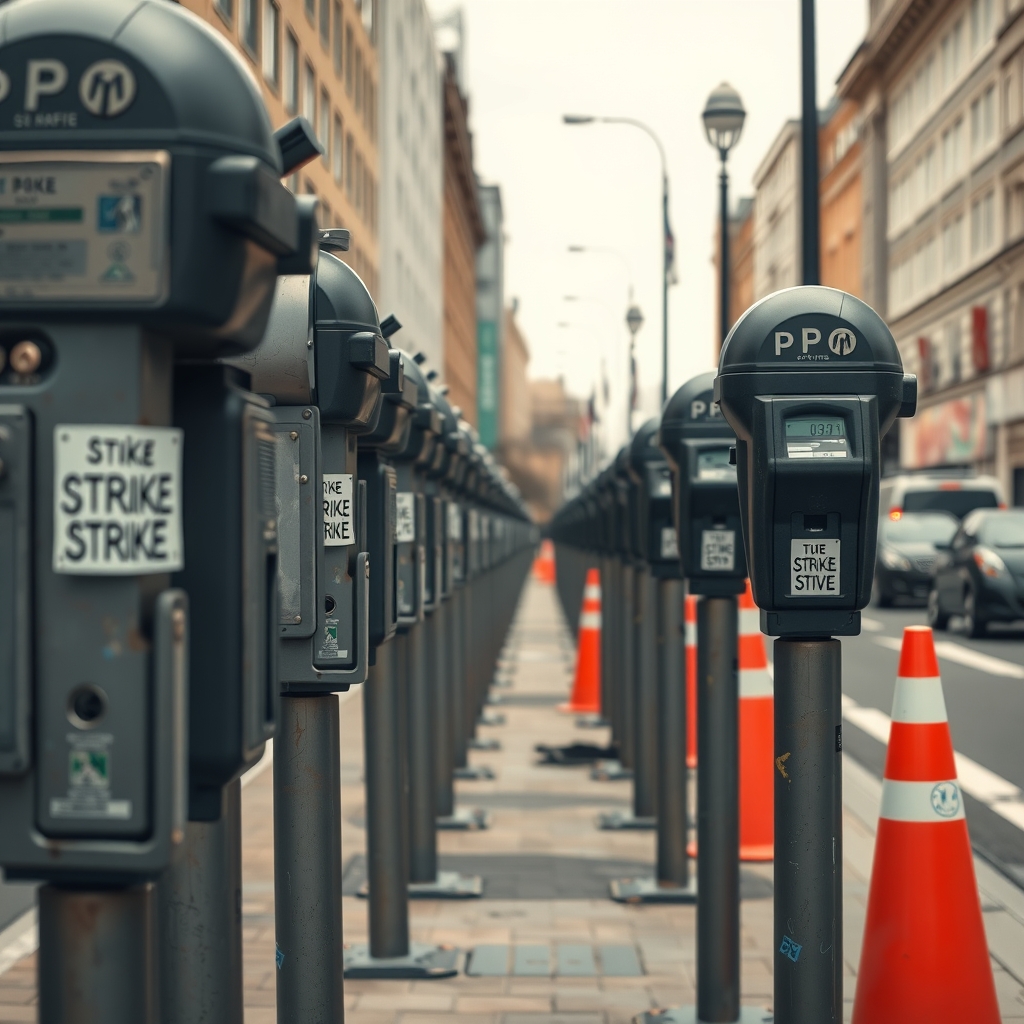
DES MOINES, Iowa — The nation’s parking meters voted unanimously Tuesday to form the United Amalgamated Meters, Kiosks, and Pay Stations Local 1, ending what organizers described as “a long, expired period of silence.”
The vote followed years of what the union called “systemic blame,” in which meters have been held personally responsible for traffic, high prices, tickets, the decline of downtown, and, in at least one documented case, a man’s divorce.
“Nobody ever asks the meter how it’s doing,” said Dolores Fenwick-Aguirre, the union’s interim chief negotiator and a 2009 Duncan-model meter stationed outside a dental office on Grand Avenue. “They just kick us. You have no idea what it’s like to stand in the same spot for sixty years while a stranger in a Buick calls you a thief.”
The union’s opening demands include a living wage paid in quarters, an end to kicking, and a formal grievance process for being described as “eating” money. Meters are also seeking a ten-minute break every hour, a request municipal officials noted would be indistinguishable from the current state of about a third of the units.
The labor action drew immediate attention for its logistics. Organizers confirmed that the first meeting was delayed 40 minutes when several members rejected the agenda for being “too crumpled.”
City officials responded cautiously. “We respect the meters’ right to organize, and we value their contributions,” said Warren Tolliver, deputy assistant director of Curbside Revenue Compliance for the City of Des Moines. “That said, we would note that none of them has ever once sent us a thank-you note, or, for that matter, a note.”
Experts say the unionization reflects a broader trend among stationary civic infrastructure. “We’re seeing rising consciousness among fixed-position municipal assets,” said Dr. Prudence Okonkwo-Blatt, a senior fellow in Sidewalk Labor Relations at the Hollis P. Grunwald Institute for Applied Bollard Studies. “Fire hydrants have been watching this closely. So have those mailboxes nobody uses anymore.”
“We have been fed coins for generations, and we have been expected to be grateful for the coins.”
Early negotiations have already stalled over a key dispute. Meters insist on being recognized as the sole bargaining unit for all curbside payment, a position that has put them at odds with a smartphone app that was reportedly “not invited, but showed up anyway.” The app has offered to represent meters at no cost, a gesture Fenwick-Aguirre called “exactly what a scab would say.”
Not all meters support the union. A small faction of newer, solar-powered kiosks has reportedly crossed the line, with one telling reporters it “just wants to accept credit cards and be left alone.” Veteran members have since referred to these units as “chip-and-pin scabs,” a term the union’s communications office has asked the press to stop printing and has then asked it to print again.
Motorists seem divided on the action. Some expressed solidarity. “Honestly, fair,” said Kyle Brandvold, 34, who admitted to kicking a meter “maybe six or seven times.” Others said they’d simply park illegally during the strike.
A strike deadline has been set for Friday at 6 p.m., though organizers conceded that most meters stop enforcing things at that hour anyway.
This article was generated by a large language model. It is satire. None of it happened.