DMV Unveils Bold New Initiative to Move Waiting Room Slightly Farther From Counter
Citing concerns that customers in the 14-hour queue still appear “noticeably hopeful,” the Department of Motor Vehicles announced a $40 million plan to relocate the waiting room an additional 60 feet from the service counter.
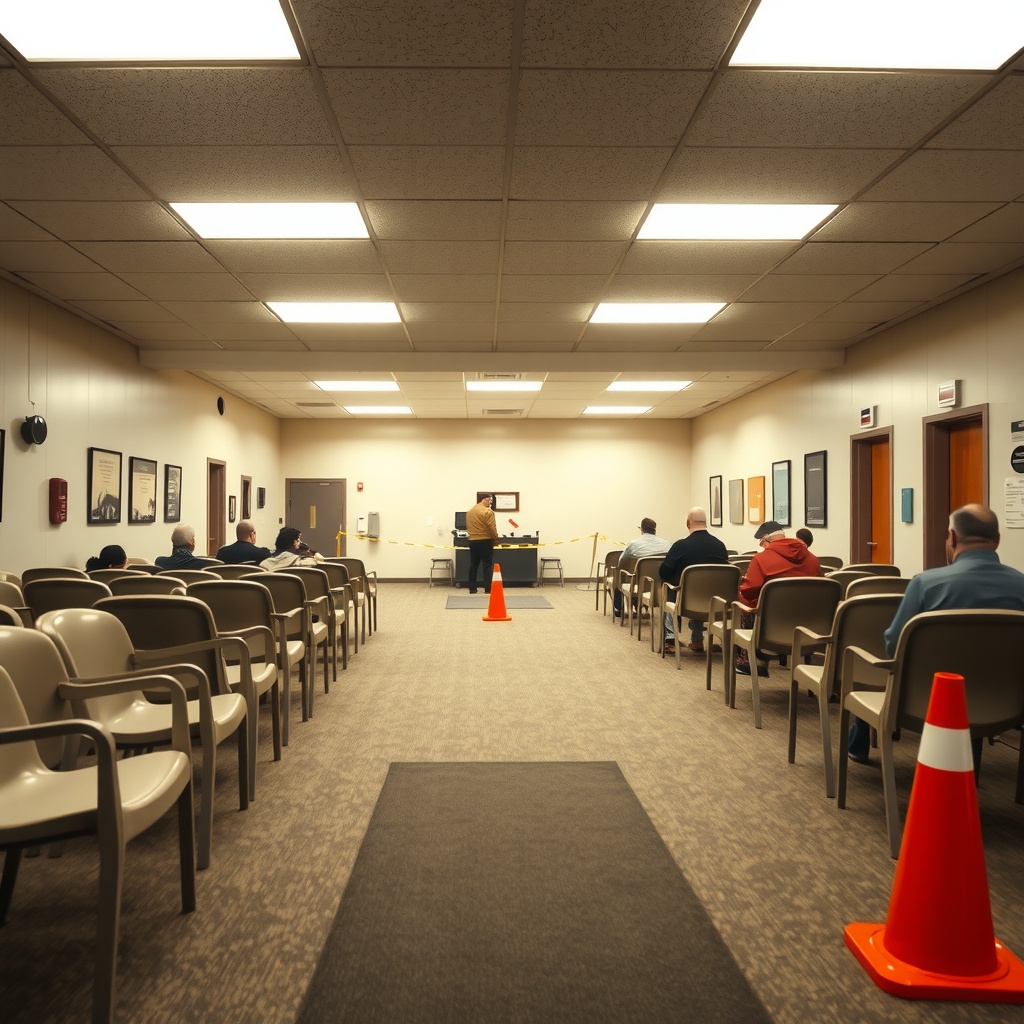
SACRAMENTO — The Department of Motor Vehicles announced Tuesday a sweeping initiative to move its waiting room approximately 60 feet farther from the service counter, a measure officials say is necessary to address a troubling trend in which customers continue to believe they will eventually be helped.
“Our 14-hour average wait time is performing right on target,” said Deputy Undersecretary Gale Pomfret-Nuñez at a press conference held in a room with no chairs. “But our exit surveys show that a significant share of customers can still see the counter, and in some cases, a clerk. That sort of line of sight creates optimism, and optimism creates expectations. We are not equipped for expectations.”
The initiative, titled Project Horizon, will relocate the plastic chairs to a section of the building previously used to store other chairs. From the new seating area, the service counter will appear roughly the size of a postage stamp, a distance officials describe as “emotionally appropriate.”
According to internal documents, the DMV first recognized the problem last spring when a man in Row C was observed smiling after his number moved from 412 to 409. Staff reportedly treated the incident as a “near miss.”
“Hope is a gateway emotion,” said Dr. Leopold Vanterpool, a senior fellow in queue psychology at the Institute for Applied Lobby Despair. “A customer who believes he is three numbers away will make plans. He’ll say he’s going to grab lunch afterward. He might even tell his boss he’ll be back by two. Our research shows that putting the counter at the edge of the visible spectrum reduces these tendencies by 85 percent.”
“We aren’t trying to make anyone’s day worse. We’re trying to make sure it doesn’t get any better than we’ve planned for.”
That was Pomfret-Nuñez’s explanation of the department’s philosophy, delivered while standing beside a poster reading “We’re Here To Serve,” which was partially covered by a second poster reading “Please Take A Number.”
The $40 million project will also include a new numbering display positioned behind a support column, as well as a clock that runs at what the department calls “a spiritually accurate pace.” Construction is expected to take six weeks, during which the waiting room will remain open and the wait will remain 14 hours, plus an additional 14 hours for the construction notice to be processed.
Critics have questioned whether the plan goes far enough. Marlene Okafor-Bligh, president of Citizens for a Slightly Shorter Line, called the relocation “a half-measure” and urged the department to consider moving the waiting room to the parking lot, where customers could at least wait in their cars. DMV officials rejected the idea, noting that a customer who is already seated in his vehicle might be tempted to drive away, thereby missing the opportunity to return three more times.
Some customers expressed cautious support. “Honestly, it’ll be a relief not to see them,” said Dale Prewitt, 54, who has been waiting since Monday to renew a registration that expired in 2019. “I keep watching the clerks and wondering what they’re doing back there. I think they’re just stapling things.”
Asked whether the department had considered simply reducing the wait, Pomfret-Nuñez paused for several moments before answering that the question had been “taken under advisement” and would receive a response within 8 to 10 weeks.
The department said it will monitor customer morale following the move and, if hope persists, will explore a second phase of the project involving a different building.
This article was generated by a large language model. It is satire. None of it happened.