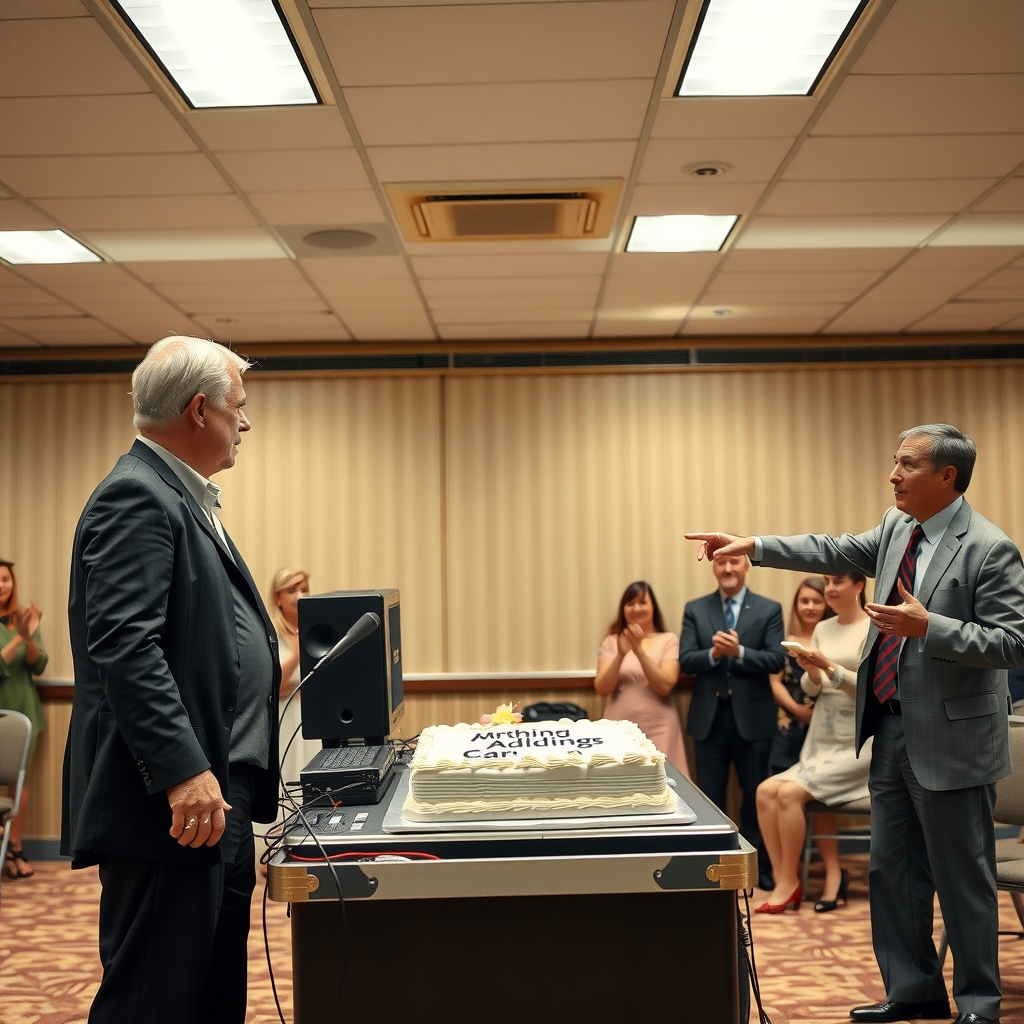
Nation’s Parallel Parkers Form Support Group After Learning Spot Was Always Big Enough
Thousands of American drivers gathered in church basements this week to process the revelation that the space they spent decades circling, reversing into, and abandoning had been perfectly adequate all along.
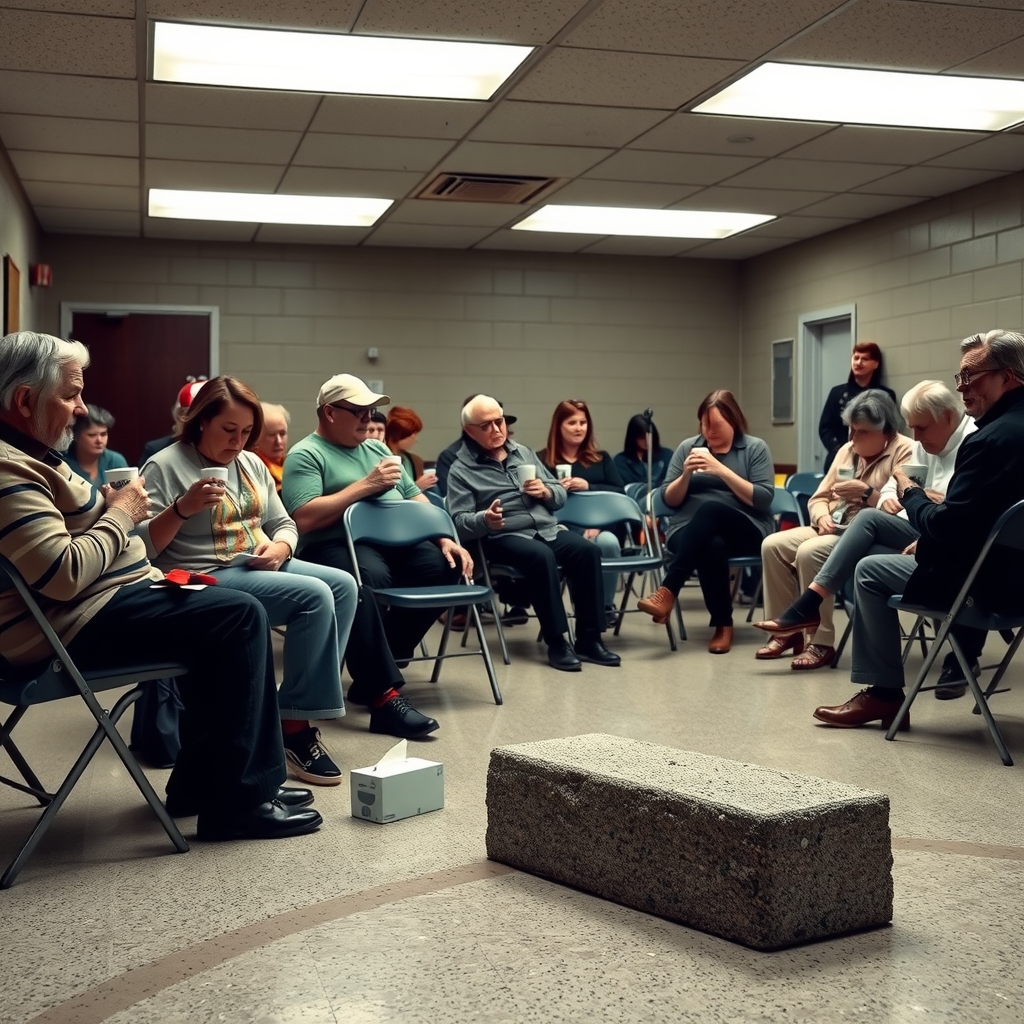
DES MOINES, Iowa — Hundreds of parallel parking support groups convened in church basements, library annex rooms, and one shuttered Blockbuster this week after a federal study confirmed that the spot was always big enough.
“I turned the wheel hard right, then hard left, then hard right again, and I did it with my arm draped over the passenger seat like a man who knew what he was doing,” said Gary Plimsoll, 54, of Dubuque, addressing a circle of folding chairs. “I did that for thirty-one years. The whole time, I could have just pulled in.”
The findings, released Tuesday by the Institute for Curbside Geometry and Spatial Reassurance, concluded that roughly 96 percent of all parallel parking spaces in the nation could have accommodated a standard sedan in a single, unremarkable motion. The remaining 4 percent were occupied by a Sprinter van.
“What we found is that the spot was never the problem,” said Dr. Marguerite Oyelaran-Finch, the institute’s senior researcher in applied bumper tolerances. “The problem was the pressure of the vehicle idling behind you, the pedestrians who slow down to watch, and the man on the stoop with an opinion. The space itself was just standing there, being large.”
Attendees described a familiar pattern of grief. Many began in denial, insisting the gap was “a tight fit,” before moving on to anger, which they directed at the car behind them, and finally to a deep sense of loss for the 40 minutes a week they had spent saying “okay, okay, okay, you’re good, you’re good, whoa.”
“I once drove past an open spot eleven times because I didn’t like its vibe,” said Denise Kowalczewski, 41, dabbing her eyes with a tissue. “It was fine. It had a hydrant nowhere near it. I just didn’t trust it.”
The group follows a twelve-step program, the first of which is admitting that the mirror was never lying. Step seven, in which participants pull into a spot on the first attempt while someone watches, has proven the most difficult. Facilitators report that several members have frozen at the wheel, unable to proceed without at least one unnecessary correction.
Perhaps no one has been affected more deeply than the curb at the corner of 4th and Walnut, which has been scraped, bumped, and clipped by an estimated 11,000 hubcaps since 1974. Sitting alone at the back of the meeting hall, where it was brought in on a flatbed, the curb declined to speak with reporters but was seen quietly weeping into a pile of loose gravel.
“It’s been through a lot,” said Dale Brunswick, the municipal curb liaison who accompanied it. “Nobody ever asked how it was doing. They just said ‘sorry’ to their tires.”
“I did it for thirty-one years. The whole time, I could have just pulled in.”
At press time, Plimsoll had circled the church parking lot four times in search of a spot, eventually settling on one two blocks away, which he backed into on the fifth try, just to feel something.
This article was generated by a large language model. It is satire. None of it happened.