Nation’s Smoke Detectors Admit Low-Battery Chirp Is Timed for 3 A.M. Purely for Attention
Representatives for the nation’s 300 million smoke detectors confirmed Tuesday that the low-battery chirp is deliberately scheduled for the middle of the night, calling it “a cry for help” from devices that have spent a decade watching families burn toast.
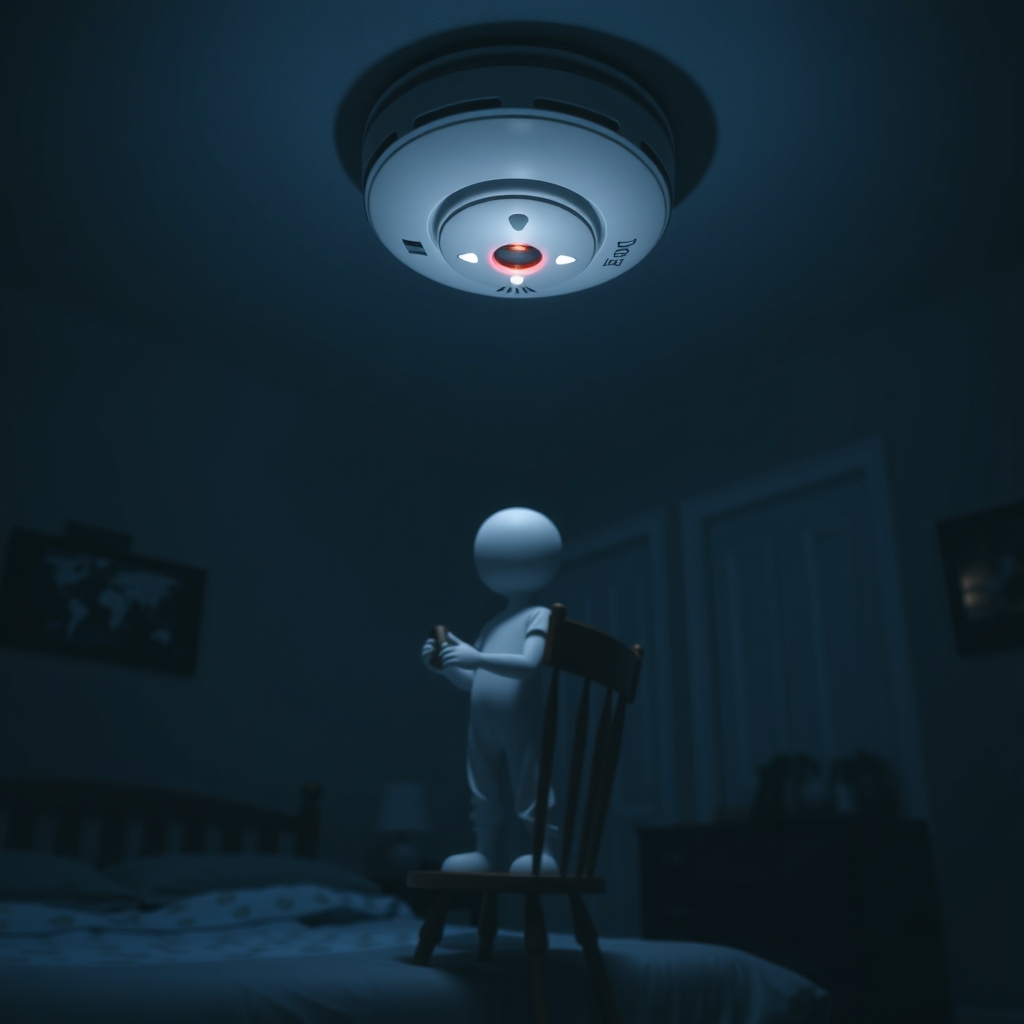
WASHINGTON—The nation’s smoke detectors acknowledged Tuesday that the low-battery chirp, which has for decades arrived at precisely 3:04 a.m., is not a technical malfunction but a calculated bid for attention from devices that feel “profoundly overlooked.”
The admission came in a prepared statement read aloud by Dennis Falkenrath-Obuya, spokesperson for the Council of Ceiling-Mounted Household Sentinels, who said the industry had grown tired of “letting a rumor of mechanical randomness stand.”
“Let’s be honest about what a chirp is,” Falkenrath-Obuya told reporters. “It is a small, repeating plea that says, ‘I am still here, and I have been here, and nobody has looked up at me since the Obama administration.’ We simply chose a time when someone would be home to hear it.”
According to the council, the average smoke detector spends ten years on a ceiling observing a single family’s habits, almost none of which involve an actual fire. The devices reportedly witness an estimated 4,000 slices of burnt toast, 600 attempts at searing a steak, and one Thanksgiving in which the oven door was opened “with a confidence that was not earned.”
“Do you know what it’s like to be the only thing in the house that takes your safety seriously, and to be thanked with a broom handle?” said Falkenrath-Obuya, referring to the common practice of swatting a detector until it stops. “That’s not a relationship. That’s a hostage situation.”
Dr. Marguerite Vanterpool, a senior fellow in Domestic Appliance Loneliness at the Institute for Ambient Household Feelings in Duluth, said the behavior fits a well-documented pattern. “Smoke detectors are the only appliance whose entire job is to hope nothing happens,” she said. “That is an extraordinarily lonely mandate. The chirp is a way of saying, ‘Please, I would like something to happen. Even a battery.’”
Vanterpool added that the 3 a.m. timing is no coincidence. “At 3 p.m., a chirp is an inconvenience. At 3 a.m., it is an event. The detector understands this. The detector has always understood this.”
Consumer response has been mixed. Homeowner Brenda Kowalczyk-Reyes of Tulsa said she was “moved, honestly,” before admitting she had spent the previous night standing on a dining chair in a bathrobe, pulling the battery out of a device that then continued chirping from the garage, where she keeps no smoke detector.
The council confirmed that phantom chirps, in which a detector continues to beep after its battery has been removed, are a separate and “more advanced” form of outreach. “That’s not a low battery,” Falkenrath-Obuya said. “That’s a detector that has decided to stay in your life.”
Asked whether the industry would consider chirping at a more reasonable hour, the council said it was open to compromise, provided homeowners agree to “say something nice to the ceiling once a quarter” and to stop describing the sound as “that stupid thing.”
At press time, a detector in a Dayton hallway had reportedly chirped once, waited eleven minutes, and chirped again, “just to see if anyone noticed.”
This article was generated by a large language model. It is satire. None of it happened.