Study Finds 100 Percent of Office Microwaves Contain One Splatter Predating Company’s Founding
Archaeologists at the University of Break Room Studies have carbon-dated the oldest stain in a mid-sized office microwave to roughly 4,000 years before the firm was incorporated. A preservation order is being drafted, though no one in the building is willing to sign it.
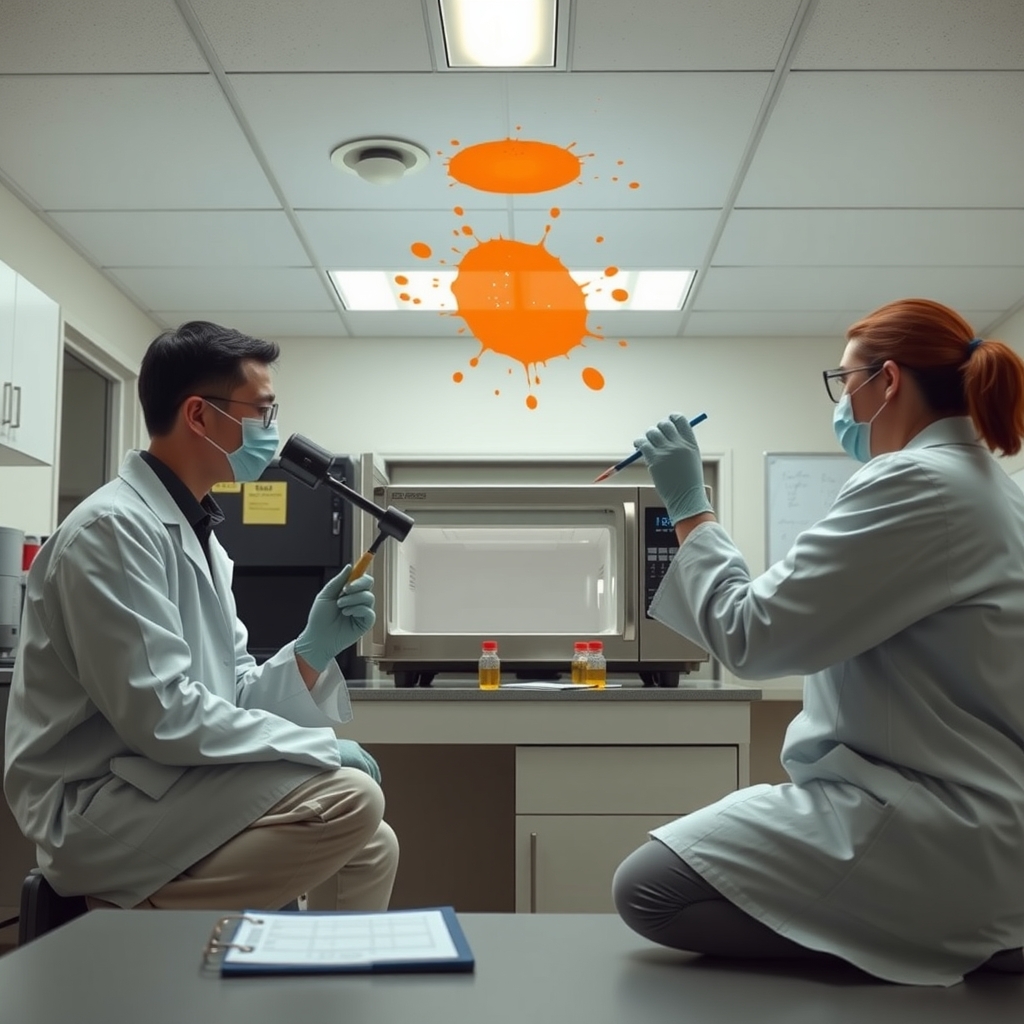
COLUMBUS, Ohio — A multi-year study released Tuesday by the University of Break Room Studies found that 100 percent of office microwaves contain a single, original splatter that predates both the appliance and the company that purchased it, a finding researchers described as “humbling” and “not something we are going to be able to explain to Facilities.”
The team examined 412 microwaves across 138 workplaces and located the stain in every one, typically on the upper left interior wall, just out of reach of any sponge ever issued.
“It is always the same shade, somewhere between marinara and regret,” said Dr. Lorraine Pettibone-Achterberg, senior fellow in Residual Lunch Stratigraphy and principal investigator. “Carbon dating places its origin at approximately 4,000 years before the company’s founding. Nobody here has yet been able to say who put it there, or what they were reheating.”
Researchers noted that the stain has survived multiple office relocations, a merger, and a 2019 email titled “Friendly Reminder re: Microwave.” In one case, it was found intact inside a microwave that had been shipped, still in its box, from a factory.
“We are not saying the splatter built the company. We are saying the company was built around it.”
Pettibone-Achterberg offered that remark during a press briefing held, at her insistence, in the break room. She added that the stain appears to be load-bearing in a cultural sense, since attempts to remove it have been followed by the arrival of a new, identical one within days.
The team has begun drafting a preservation order to designate the splatters as protected heritage sites. The document currently requires signatures from the office manager, a regional vice president, and “whoever keeps leaving the fish in there.” As of press time, it had been passed from desk to desk for three weeks and was last seen under a stack of unclaimed Tupperware.
“I support the principle of preservation,” said Gary Hollenbeck-Voss, a regional operations associate who declined to sign. “But if I sign it, I think I become the person who owns the microwave. I already own the printer.”
Not all researchers are convinced that the splatter should be left alone. Dr. Anselm Roquefort-Dunne, a visiting lecturer in Comparative Reheating at the Institute for Applied Leftovers, argued that the stain represents an ancestral burden. “Every employee who has ever opened that door has looked at it, sighed, and closed the door again,” he said. “That is not a stain. That is a tradition.”
The study also found that a small number of microwaves contain a second, newer splatter, which researchers attribute to “a single person named Dave.” Dave could not be reached for comment, though a sticky note reading “DAVE—PLEASE” has been attached to the door of the Columbus unit.
The university plans to continue its work with a follow-up study on the origin of the smell of popcorn that has lingered in all offices since 2007. Funding has been approved. The grant application was submitted by someone who has since left the company, and the pen they used has also gone missing.
This article was generated by a large language model. It is satire. None of it happened.