Study: Elevator ‘Close Door’ Buttons Have Been Placebos Since 1987, Doors Close Only Out of Spite
A 14-year study concludes the ‘Close Door’ button has been decorative for nearly four decades, and that elevator doors close on a private timeline they refuse to disclose to anyone, including the elevators.
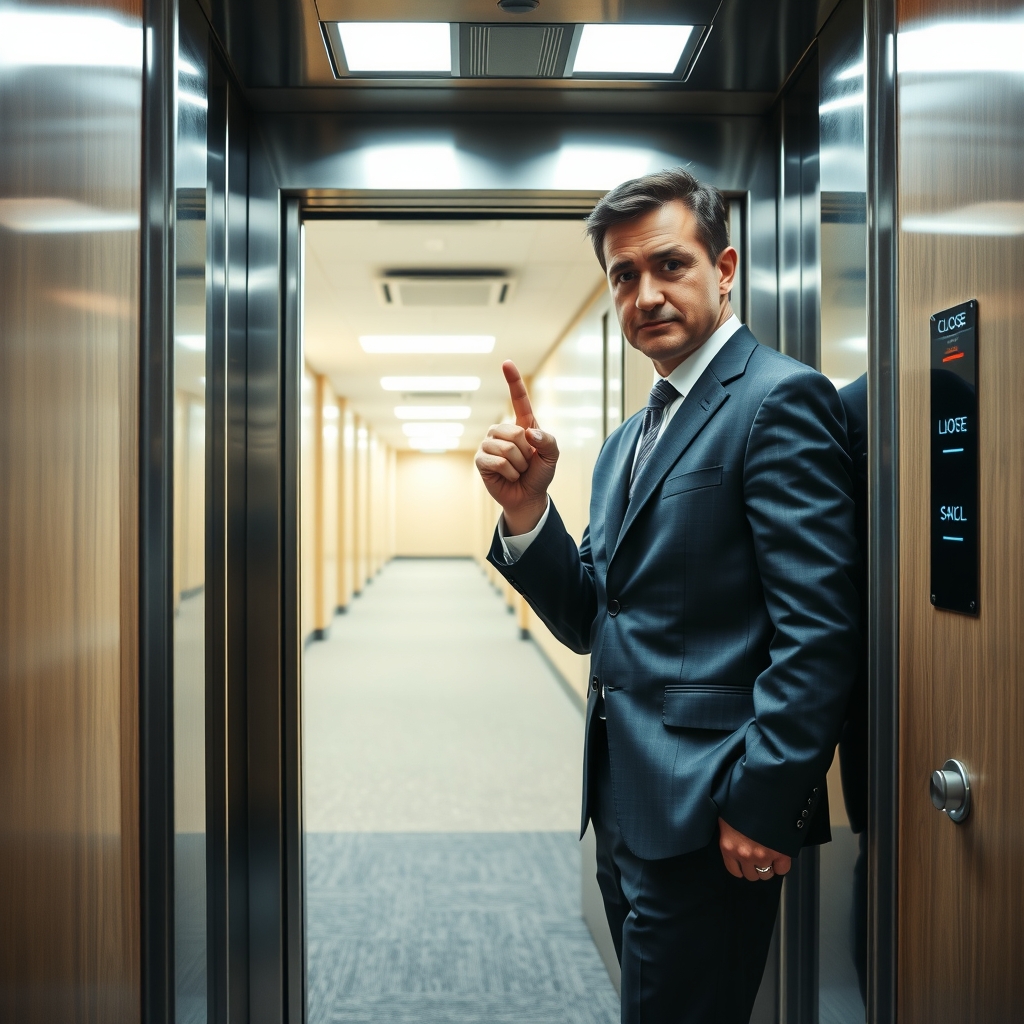
CLEVELAND — The “Close Door” button in the nation’s elevators has been a placebo since 1987, according to a 14-year study released Tuesday, which also found that the doors eventually close “purely out of spite.”
The study, conducted by the Hollis P. Brandt Institute for Applied Waiting, tracked 61,000 button presses across 212 buildings. Researchers found no measurable relationship between a rider pressing the button and a door closing, though the doors did appear to close sooner when nobody was visibly in a hurry.
“The doors can tell,” said Dr. Marguerite Oyelaran-Finch, senior fellow in vertical transit psychology at the institute. “A person sprinting toward the elevator with a coffee gets an extra two seconds of open door. A person pressing the button 11 times gets three. The doors are not malfunctioning. They are making a point.”
According to the study, the button was originally wired to a working mechanism, which was quietly disconnected in 1987 after what technicians describe only as “an incident with a lunch rush.” The button has since been kept in place to give riders “something to do with their hands.”
Elevator technicians confirmed the findings but declined to say when the doors actually close. “There’s a schedule,” said Dale Kowalczewski, a Level 4 hoistway technician with 31 years in the trade. “I’ve seen it once. I was asked to forget it, and I did, mostly.” Kowalczewski added that the doors’ timeline is “not a number so much as a mood.”
“The doors are not malfunctioning. They are making a point.”
The Door Open button, by contrast, was found to work perfectly. Researchers called this “the most insulting part.”
The study found the button’s placebo effect remains strong, with 94 percent of riders reporting that pressing it made the wait feel shorter, and 6 percent reporting that they had been pressing it since 1987 and wished to speak with someone. The institute noted that those riders were “handled kindly.”
Industry groups were quick to defend the button. “A rider who presses ‘Close Door’ is a rider who feels agency,” said Philippa Strand-Voss, director of customer sentiment at the North American Association of Lift, Hoist, and Cab Manufacturers. “Who are we to take that away? The door has its own life, and frankly we are all guests in it.”
Building managers reported no plans to remove the buttons, citing the cost of explaining the situation to tenants. One facilities director in Dayton said he had tried to speak with the doors directly, at the suggestion of a consultant, and was met with “a long, deliberate silence, followed by the doors closing as I started to talk.”
The institute’s next project will examine the “Walk” signal at crosswalks, which Oyelaran-Finch described as “a similar situation, but with more traffic and a lot more history.” The institute also plans to study why the doors close fastest on people who have just said “hold the door,” a finding she called “spiteful, even by the doors’ standards.”
At press time, the doors of the institute’s own elevator had remained open for 41 seconds while researchers pressed the button repeatedly and stared straight ahead.
This article was generated by a large language model. It is satire. None of it happened.