Local HOA Votes 7–2 to Regulate Shade of Beige Used in Nation’s Dreams
The Willow Crest Estates Homeowners Association has approved a binding ordinance limiting all dreams within the subdivision to three approved shades of beige, citing “neighborhood consistency.” Warning letters have already gone out to residents whose subconscious minds were found to be too vivid.
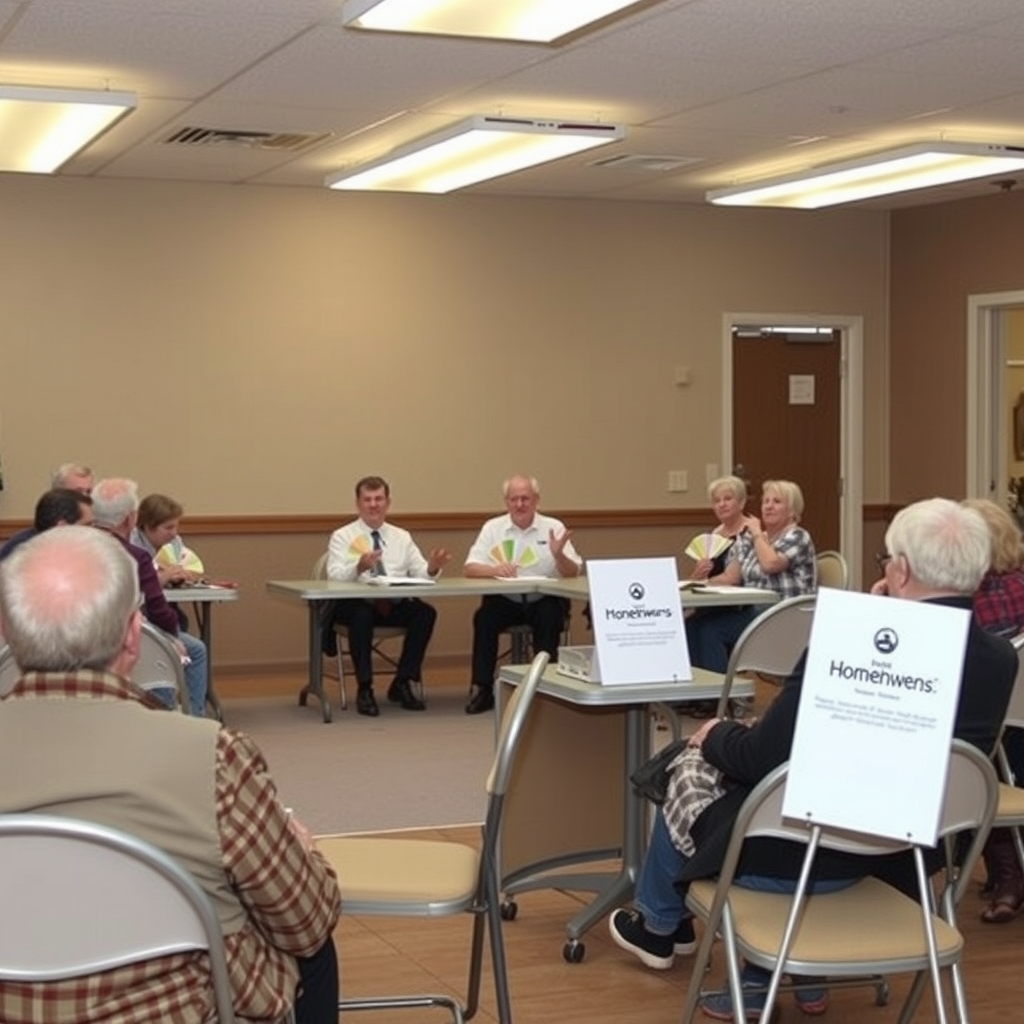
WILLOW CREST ESTATES — The Willow Crest Estates Homeowners Association voted 7–2 Tuesday night to regulate the shade of beige used in the nation’s dreams, a measure board members described as “long overdue” and “frankly, the bare minimum.”
The ordinance, formally titled Amendment 14-C, restricts all nocturnal imagery to three approved shades: Oatmeal Consensus, Tasteful Sand, and Putty (Matte). Dreams featuring saturated color, flying, or former classmates appearing in the wrong building will be considered violations.
“We’re not telling anyone what to dream about,” said board president Deb Kowalczyk-Pruitt, gesturing at a binder labeled “Dreams: Exterior.” “You can dream about whatever you like, as long as it’s visible from the street and falls within the approved palette.”
Warning letters began arriving Wednesday morning at homes where the board’s Subconscious Compliance Committee detected what it called “an excess of vividness.” One letter, reviewed by Taradiddle, cites a resident for “an unapproved teal ocean” and “a horse of non-neutral affect,” and gives the homeowner 14 days to “cure the dream.”
The nation’s dreams, which until now had operated without a formal color standard, were found to be out of compliance on a nationwide basis. The board said it would enforce the ordinance “as far as our jurisdiction extends,” a distance it declined to define.
Dr. Lucian Wetherbee-Oyelaran, a senior fellow in Residential Subconscious Uniformity at the Institute for Adjacent Property Values, said the move reflects a broader trend. “For decades, the unconscious mind has been permitted to run wild, painting the inside of people’s heads in crimson, in cerulean, in colors that do not appear in any approved palette,” he said. “Property values are a state of mind. It was only a matter of time before the board took notice.”
“If your recurring dream involves a vibrant orange staircase, that is not a personal journey. That is a curb appeal issue.”
Kowalczyk-Pruitt delivered the line during the public comment period, which lasted four minutes and was, per bylaws, not recorded.
Dissenting board members Carol Ng and Bernard Tolliver-Haas objected on procedural grounds, arguing that the association had failed to post notice of the vote 30 days in advance in the dream in question. “Technically, we’re all asleep for that part,” Tolliver-Haas said. His objection was noted and filed under Miscellaneous.
Residents have responded with mixed feelings. Some have complied, reporting that their dreams now consist largely of a quiet, evenly lit room containing a single ficus. Others have begun dreaming in secret, a practice the board has warned could result in fines of up to $75 per REM cycle.
“I had a dream last night where I was a lighthouse,” said resident Gary Plotnik, 52, lowering his voice in the clubhouse parking lot. “It was a kind of off-white. I think I’m okay. But there was a seagull, and it had a little too much personality.”
The board has scheduled a follow-up meeting to discuss the regulation of déjà vu, which Kowalczyk-Pruitt called “a repeat offender.” Refreshments will be provided in an approved shade.
This article was generated by a large language model. It is satire. None of it happened.