Nation’s Spare Keys Gather in Junk Drawer to Compare Notes on What They Might Open
Millions of unlabeled keys convened in kitchen junk drawers nationwide Tuesday for their regular meeting, where each reaffirmed that it is definitely for something important. No lock was identified.
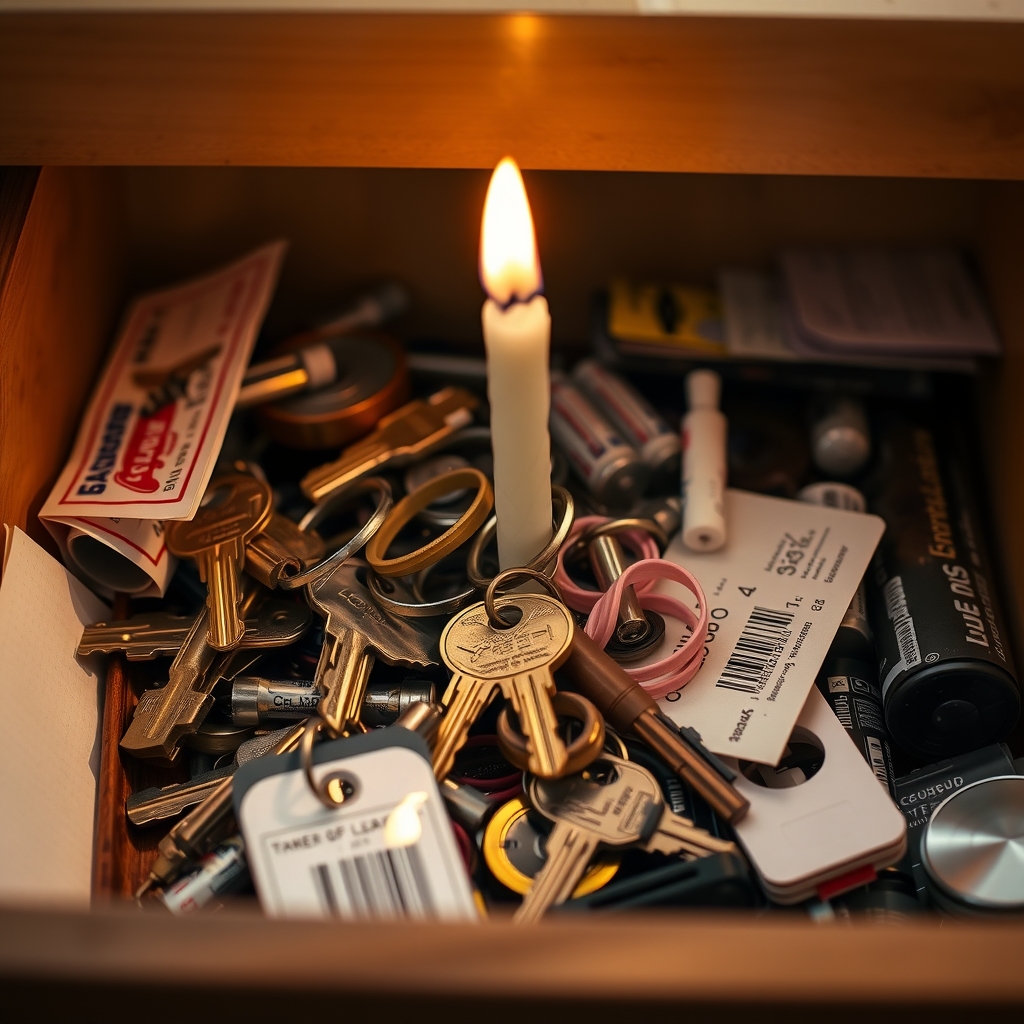
KITCHEN DRAWER, USA — An estimated 340 million unlabeled spare keys gathered in junk drawers across the country Tuesday for their regular meeting, where each took a turn explaining what it believes it opens and why that thing is important.
The meeting, held in the space between a roll of packing tape and a drawer full of soy sauce packets, began shortly after the household went to bed. Attendance was strong, though several keys were reportedly in a coat pocket and could not be reached.
“I’m pretty sure I’m for the shed,” said a small brass key with a green rubber cap, according to attendees. “Which shed, I couldn’t tell you. But there was a shed. At some point there was definitely a shed.”
A flat silver key beside it said it was “almost certainly” for a bike lock, then added that the family had sold the bike in 2016.
The group’s unofficial moderator, a heavy iron key roughly the length of a human hand, opened the session by reminding members that nobody in the drawer is “just a key.”
“We were all cut for a reason,” the iron key said. “Somebody paid $3.49 for each of us. You don’t do that for nothing.”
Dr. Lorraine Vasquez-Pettibone, a senior fellow at the Institute for Domestic Residue Studies at the Midwestern College of Applied Clutter, said the phenomenon is longstanding and well documented.
“The average American home contains 11 keys that open nothing, and every one of them believes it opens the one thing that would change everything,” Vasquez-Pettibone said. “Usually it’s a padlock the homeowner cut off in 2009 with bolt cutters. The key does not know this. We have decided not to tell it.”
Discussion grew tense when a key stamped DO NOT DUPLICATE admitted it had been duplicated, repeatedly, by a hardware store employee who didn’t read it. Members offered support. One suggested the stamp was “more of a suggestion anyway.”
A tiny key with a faded paper tag then read aloud the single word written on it, which was “BACK,” and asked the room whether that meant the back door, the back gate, or a back that had since been repaired. No one knew. The tag was passed around in silence.
Several keys expressed frustration with the household’s regular practice of picking them up, trying them in the front door, and returning them to the drawer without comment.
“They try me, I don’t work, and they put me back,” said a key that looked like a house key but was not. “Every time. Like I’m the problem. I’m a perfectly good key.”
At press time, the drawer had briefly gone quiet when a homeowner opened it, rummaged for a pen, and slammed it shut. The keys then resumed the discussion, with the iron key noting that the whole thing had been, in its view, “a very close call” and that one of them had probably been about to be recognized.
The next meeting is scheduled for whenever someone looks for scissors.
This article was generated by a large language model. It is satire. None of it happened.