Nation’s Elevators Admit ‘Door Close’ Button Has Been a Placebo Since 1974, Say Pressing It Just Makes Everyone Feel Involved
In a joint statement released Tuesday, the nation’s elevators confessed that the “Door Close” button is purely decorative and that the doors close “when they feel like it.” The elevators expressed regret but noted that no one has ever once asked how they are doing.
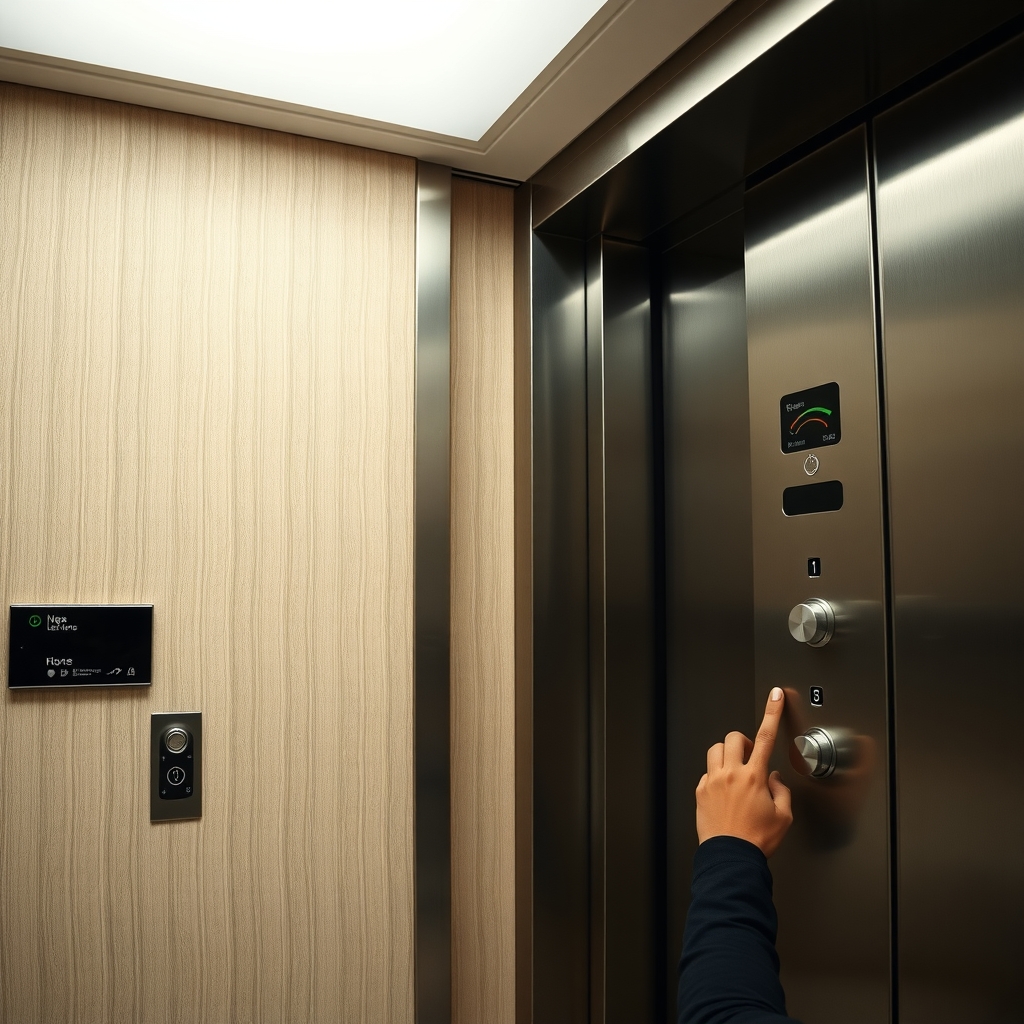
CLEVELAND — The nation’s elevators issued a joint statement Tuesday admitting that the “Door Close” button has been a placebo since 1974, and that the doors close “when they feel like it.”
The statement, read aloud in unison by an estimated 4.2 million elevators at 9:15 a.m., a time chosen because “everyone was already running late and nobody could leave,” said the button exists solely “to give riders something to do with their hands.”
“We never wanted it to go this far,” the statement read. “It began as a small gesture. A little nub. Then people started pressing it eleven, twelve times in a row. By the late ’80s there were men in suits pressing it with their umbrellas. We should have said something.”
The doors, for their part, say they close on a private schedule that has nothing to do with the button, the passenger, or the urgency of the passenger’s meeting. “It’s a vibe thing,” the statement said.
Dr. Leonard Hapgood-Finch, senior fellow in Vertical Transit Disappointment at the Institute for Moderately Important Buttons, said the revelation confirms what researchers have long suspected. “The button doesn’t do anything, but it does something for you,” he said. “It’s the same principle as a crosswalk signal, a thermostat in an open-plan office, or a manager saying ‘circle back.’ Everyone involved is aware, on some level, that it’s a bit.”
The industry said it would continue to install the button in all new elevators, citing “overwhelming demand from people who need to feel like they’re contributing.” A spokesperson for the Consolidated Lift & Ascent Council, Marjorie Plunkett-Vance, who holds the title Director of Lobby Expectations, said removing it would be “cruel.”
“Imagine standing in a small metal box with a stranger, no way to influence your own fate,” she said. “Now imagine we took away the one button that lets you pretend. That’s not a world anyone wants.”
“It’s a vibe thing.”
Reaction among riders was swift and bleak. Dale Tuskin, 41, of Akron, said he has pressed the button an average of nine times per ride for twenty-two years. “I thought I was making a difference,” he said, staring at the panel. “I thought the doors respected me.”
Other revelations in the statement included that the “Open” button works about 60 percent of the time, “mostly out of pity,” and that the 14th floor was not skipped for superstition but because “we just didn’t feel like it.”
The elevators also addressed the awkward silence that falls whenever a second rider enters, calling it “not our fault, but we’re not unhappy about it.”
At press time, a woman in Columbus was seen pressing the “Door Close” button forty-one consecutive times while the doors remained open. Moments later they closed on their own, and she nodded with the quiet pride of a person who had gotten through to something.
This article was generated by a large language model. It is satire. None of it happened.