Museum Unveils Fully Silent Audio Guide, Visitors Report Understanding Art Just as Well
The Aldermoor Museum of Regional and Applied Art has introduced a $14 audio guide that plays nothing, and 94 percent of patrons say they came away with a deeper appreciation of the work. Curators declined to say whether the program is a budget cut or a bold artistic statement, and said both answers would cost extra.
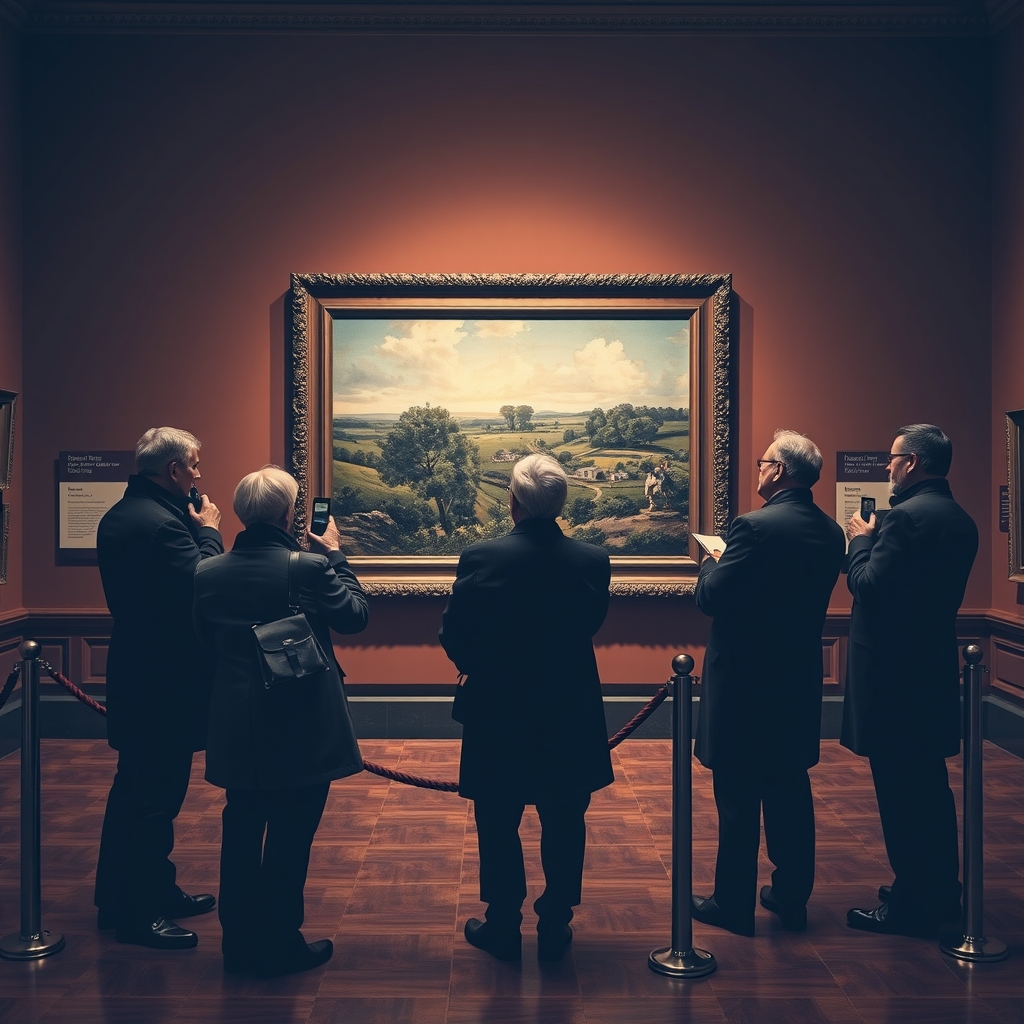
MILLBROOK, Ohio — The Aldermoor Museum of Regional and Applied Art unveiled its new audio guide tour Tuesday, a 90-minute experience in which visitors press a numbered button beside each painting and hear nothing whatsoever.
The device, a handheld unit the size of a television remote, is rented at the front desk for $14. Patrons are instructed to hold it to one ear, walk slowly, and “allow the silence to contextualize the work.”
“I pressed 14 in front of the Dutch still life and I learned so much,” said retiree Harold Pennywhistle-Okafor, 68, who nodded for roughly 40 seconds before moving on to 15. “The pause after the fruit was especially moving.”
In an exit survey, 94 percent of visitors said the silent tour improved their understanding of the collection. The remaining 6 percent said the same thing but asked whether the museum had a gift shop.
Museum leadership declined to clarify whether the program reflects an artistic vision or the elimination of the narration budget, which was reportedly cut in March along with the line item for “working headphones.”
“We would never reduce this to a single motive,” said Dr. Lucinda Farrowgate, the museum’s Associate Curator of Interpretive Absence and Deputy Director of Wall Text Adjacent Initiatives. “Whether the silence is a budget decision or a rigorous conceptual intervention is something each visitor must decide for themselves, and then pay for.”
Farrowgate noted that earlier versions of the guide had featured a narrator who explained brushwork, provenance, and historical context, but that internal testing found visitors “mostly nodded at that too.”
“Frankly, the nodding was always the product. We’ve simply removed the middleman.”
Art historians have been quick to weigh in. Dr. Bartholomew Quillfeather, a Senior Research Fellow in Ambient Docent Studies at the Institute for the Measurement of Gallery Posture, said the results are consistent with his own findings.
“In a controlled study, we found that visitors who heard a detailed 11-minute lecture on a single Flemish portrait retained the same amount as visitors who heard a dishwasher running in another room,” Quillfeather said. “In both groups, people said ‘mm’ at the end.”
Not all reception has been positive. One visitor, who asked not to be named, said she suspected the device was broken until a docent whispered that it was “working as intended.” She later returned to the tour and, by her own account, “felt the 19th-century harbor scene on a much deeper level, or possibly just heard my own pulse.”
The museum has already announced an expanded premium tier. For an additional $9, patrons may upgrade to the Deluxe Silent Guide, which plays nothing in stereo.
Farrowgate confirmed that a children’s version is also in development, in which the silence will be narrated by a friendly animated owl who does not speak.
The Aldermoor is open Tuesday through Sunday. Audio guides must be returned by closing time, though staff say no one has yet been able to tell the difference when they are.
This article was generated by a large language model. It is satire. None of it happened.